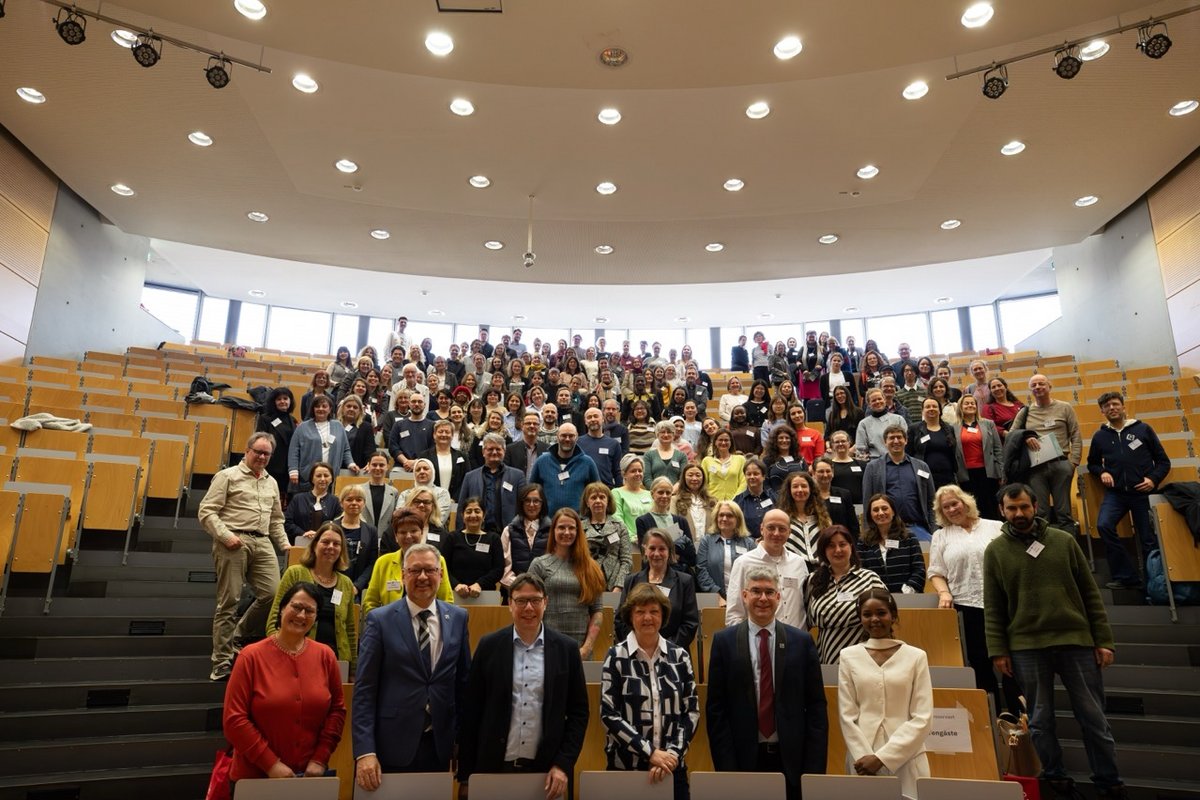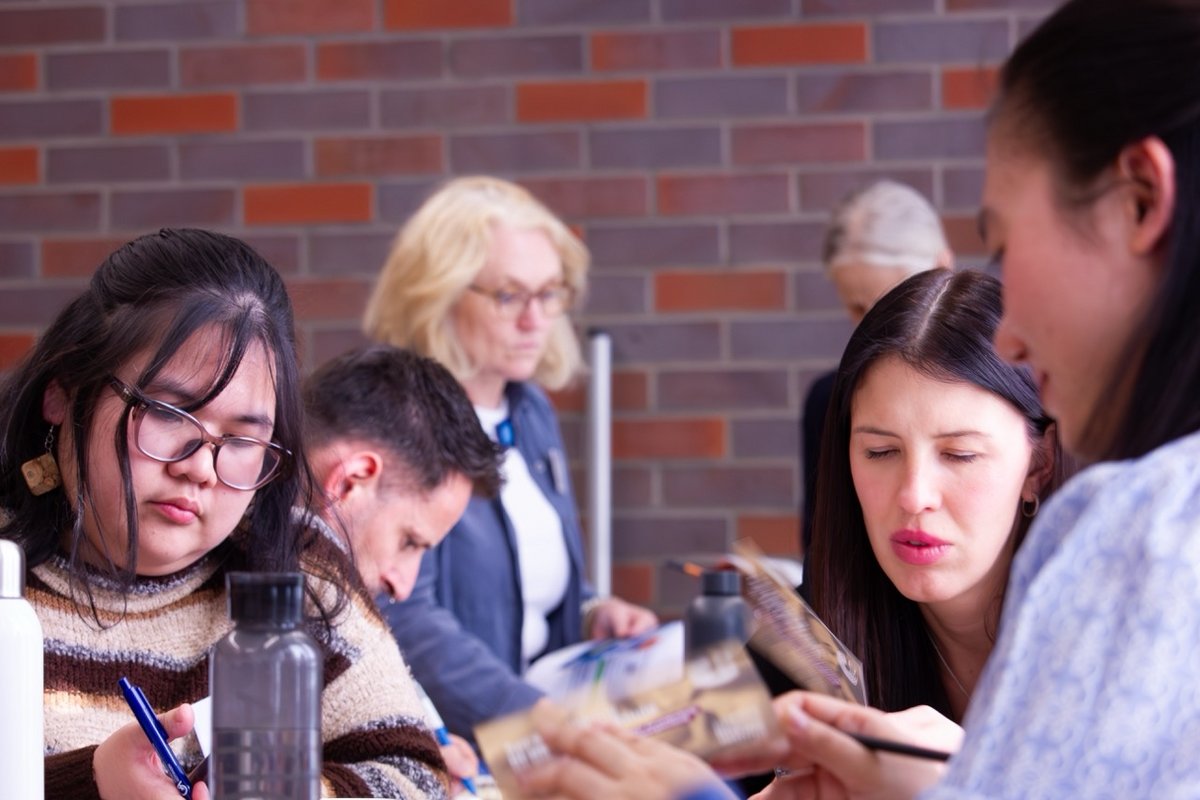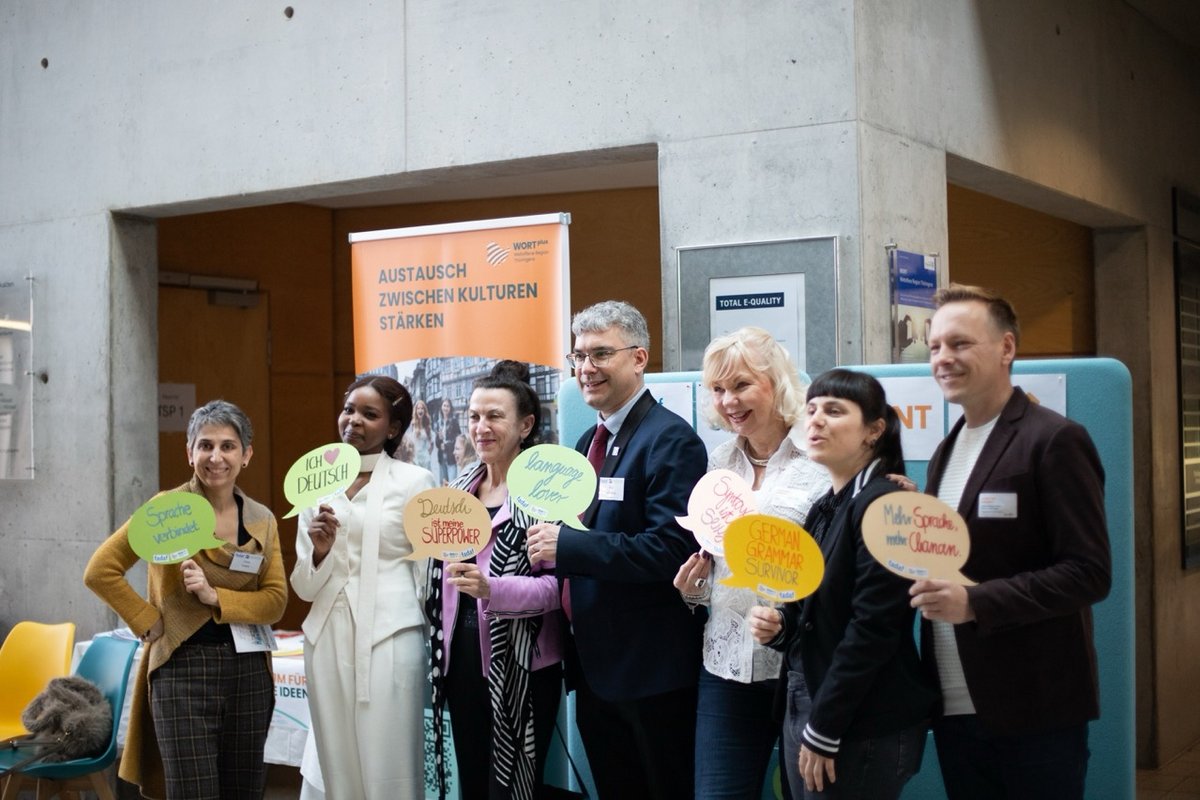
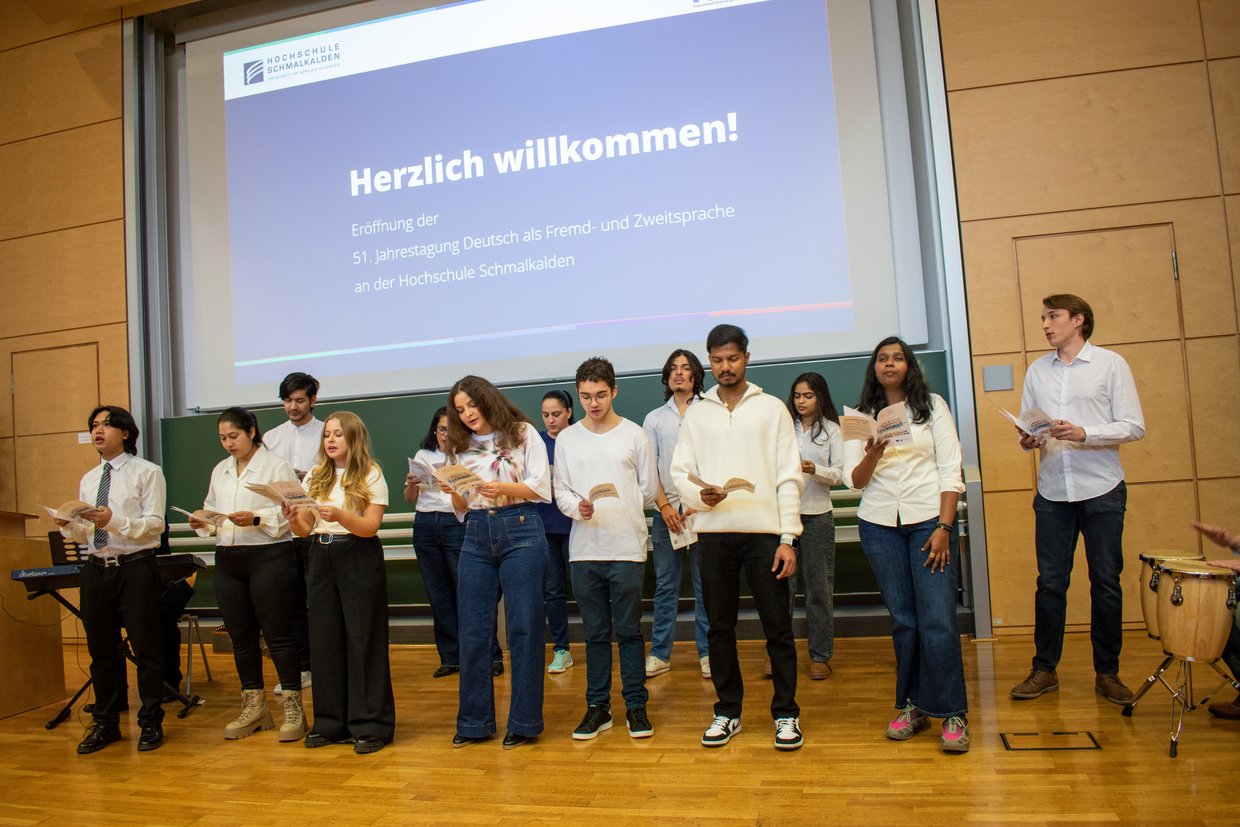
Over 200 participants traveled to Schmalkalden to attend the 51st FaDaF Annual Conference. The annual conference serves as a forum for meeting and exchanging ideas on a wide range of topics related to the theory and practice of German as a foreign and second language. It brings together teachers, researchers, students, and other experts to jointly explore the significance of learning German as a foreign or second language and to learn about and discuss perspectives from research.
German as a foreign and second language plays a central role, particularly with regard to the integration of immigrants. “Language opens up educational opportunities, enables social participation, and paves the way for vocational training, higher education, and careers,” said Thuringia’s Minister of Education, Christian Tischner, in his welcoming remarks as patron of the event.
At the opening of the conference in the main auditorium, University President Prof. Gundolf Baier welcomed all participants and presented the university as an international hub for learning and exchange. At the university, too, German language instruction for international students is an important component of their integration and has therefore been further strengthened. Mayor Thomas Kaminski took the opportunity to introduce his city to the guests and invited them to enjoy Schmalkalden, get to know it better, and take home many positive impressions. The opening ceremony was accompanied by music from the international choir.
The conference covers a total of four key thematic areas—“Critical Perspectives on Racism,” “Language of Education,” “Interdisciplinary Grammar,” and “International Degree Programs”—as well as the “Teaching” forum, which focuses on “Education for Sustainable Development.” It serves as both an academic platform and an industry gathering that facilitates and promotes exchange among researchers, educators, publishers, and institutions. A key theme is the internationalization of the field, particularly in the context of attracting and retaining skilled workers, which will be discussed in detail during the panel discussion “German in the Recruitment and Retention of International Skilled Workers.”
Taken as a whole, the annual conference in Schmalkalden serves as both a look ahead and a guide: it combines the established history of the field with forward-looking ideas from the areas of internationalization, digitalization, professionalization, and social relevance, according to FaDaF Executive Director Dr. Annegret Middeke. In this way, it not only highlights the continuous development of DaF/DaZ but also underscores the discipline’s position as a globally networked, interdisciplinary, and socially significant field of research and practice.
The conference is being organized by Dr. Paul Voerkel and his team. He heads the International Office and the Center for Interdisciplinary Learning (ZfL) at Schmalkalden University of Applied Sciences. He aims to integrate the latest findings from the DaFZ into the classroom, thereby strengthening and professionalizing the ZfL.
Information about the program:
https://www.fadaf.de/fadaf-veranstaltungen/jahrestagung-2026-in-schmalkalden/