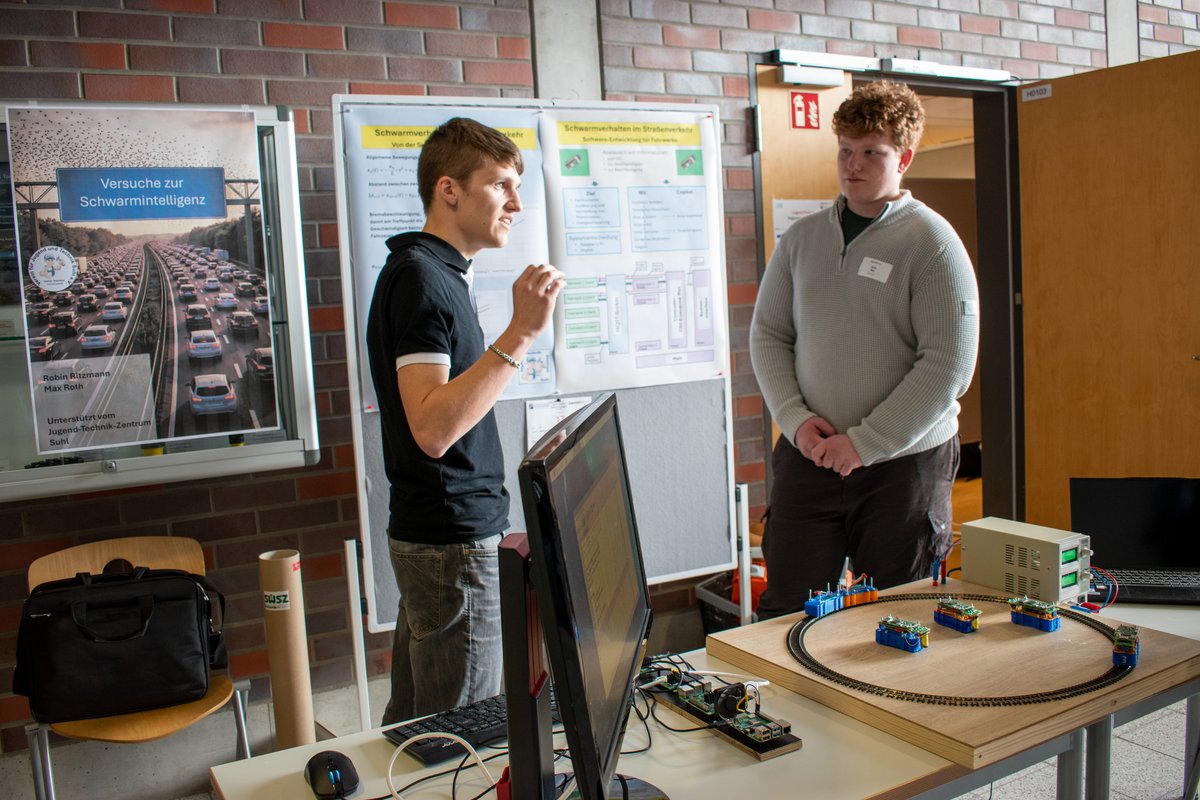
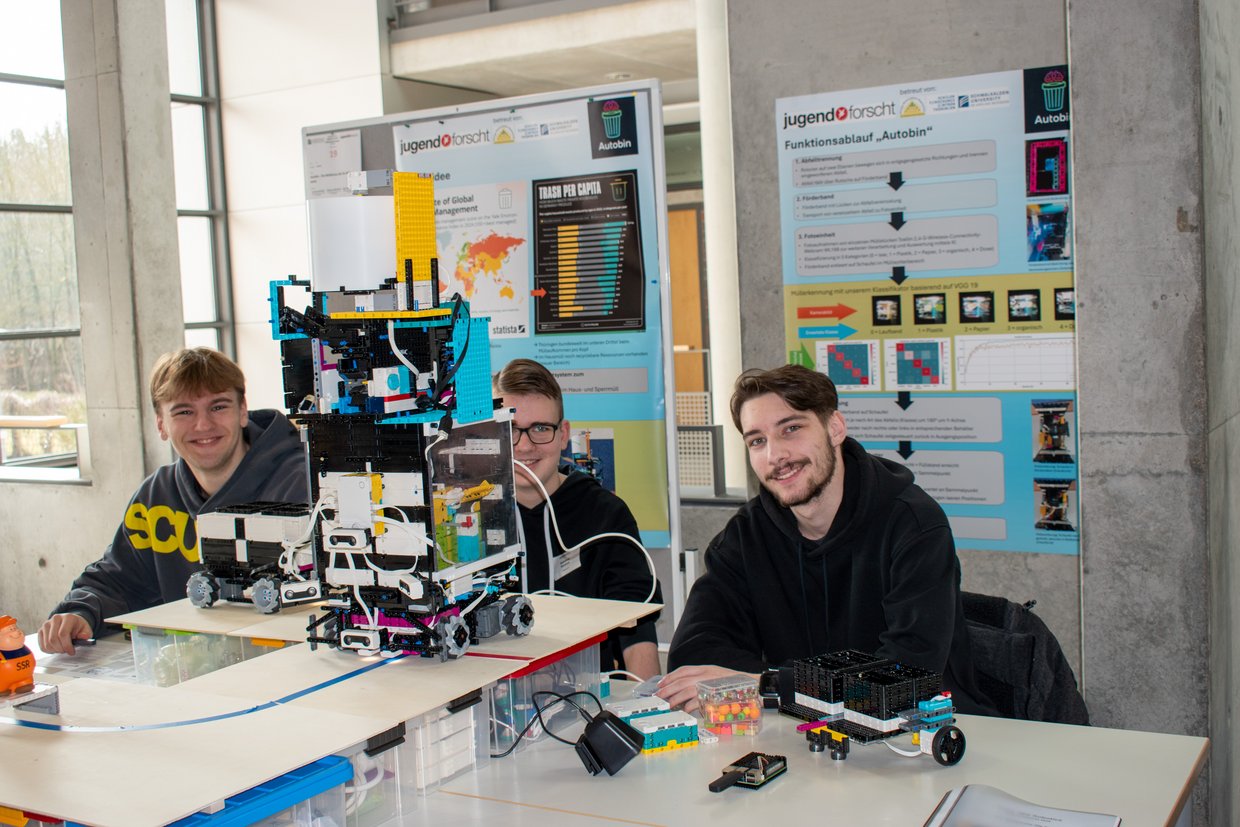
Under the motto “Maximum Perspective,” the Southwest Thuringia regional competition of Jugend forscht took place for the ninth time on Tuesday at Schmalkalden University of Applied Sciences. Forty-eight young researchers presented their 19 creative projects to a jury and the public. In the morning, around 70 elementary school students also tried their hand at experimenting at various STEM stations.
There was a lively atmosphere in the lecture hall building on Tuesday: 48 students from seven schools came to the university to present their research projects at the Southwest Thuringia regional competition of Jugend forscht. “Jugend forscht has been around since 1965 – longer than I've been alive,” said Vice President Prof. Thomas Seul at the opening. “Be happy that you can be here and enjoy the event,” he called out to the students. Seul reported that some Jugend forscht participants had even gone on to have really good careers.
The range of topics was once again very diverse this year: in short, the young researchers explored many exciting questions from almost all areas of life. Lara Seemann, Vivien Latka, and Jonas Blum from Rhön-Gymnasium investigated sugar consumption at their school. To do this, they kept a sugar diary and conducted a sugar-free week. The aim was to find out what role sugar plays in the lives of students and to what extent they are aware of the effects and consequences of sugar consumption. Jeremy Berthold, Gianluca Rothämel, and Ben Hessenmöller developed a self-sorting, self-driving, and self-emptying trash can called Autobin. With this invention, the Schmalkalder Gymnasium students want to make cities cleaner and improve recycling. Hugo Prüger, Max Klatt, and Lukas Jäger from the Evangelical High School in Meiningen developed a digital 3D model of the Meiningen City Church based on self-generated drone images and complex calculations.
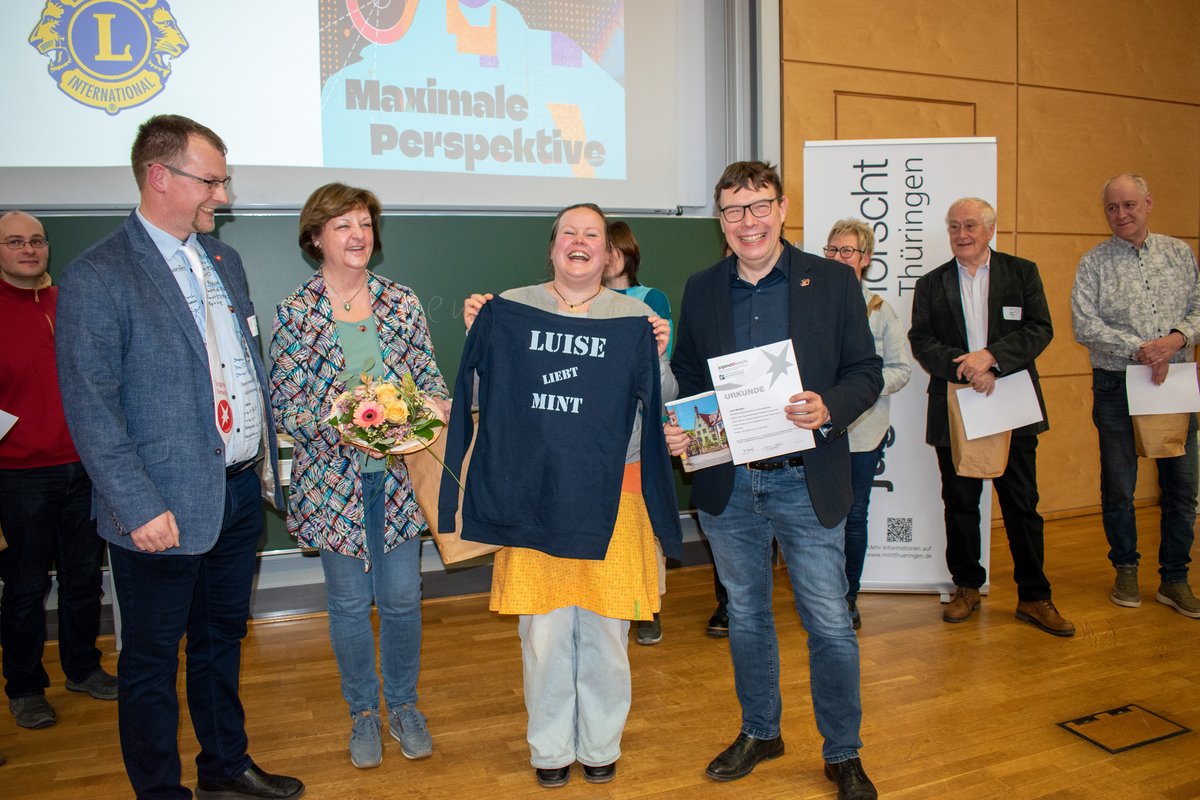
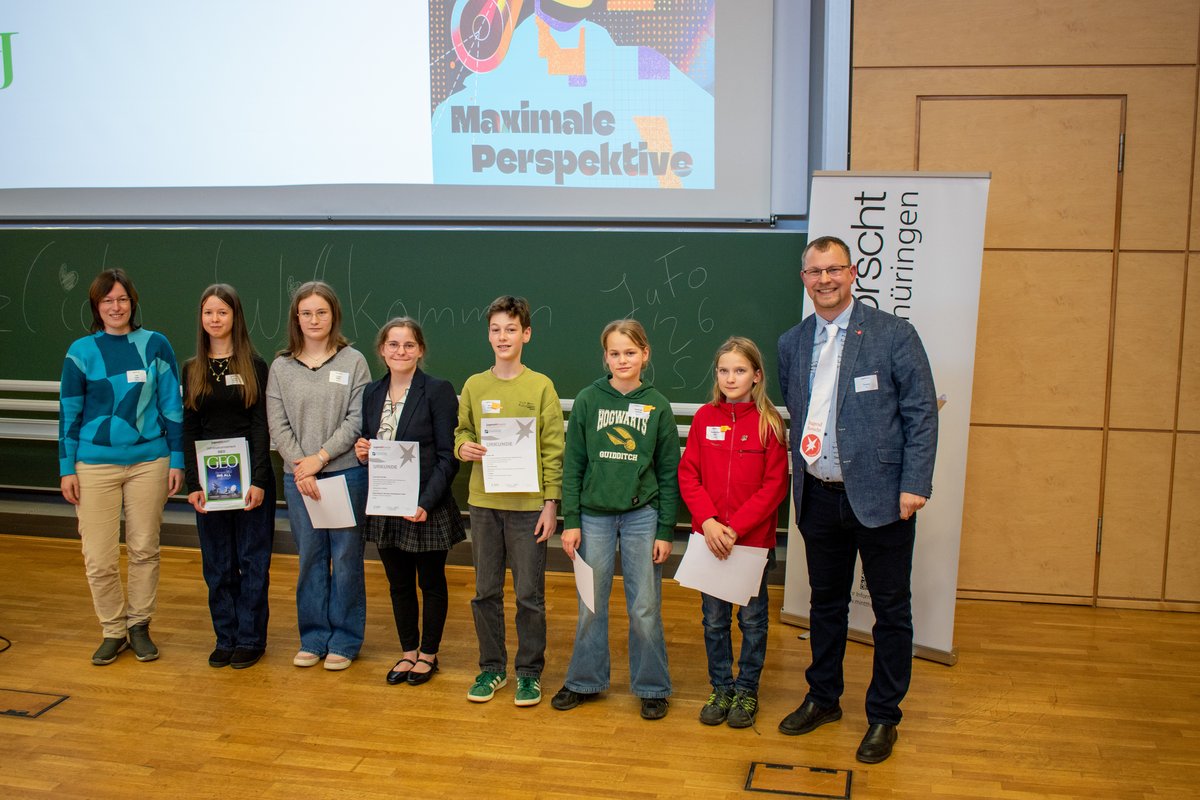
At the end of the event, an 18-member jury consisting of STEM teachers, professors, and representatives from research and business institutions selected the regional winners in the categories “Jugend forscht” and “Jugend forscht junior”. The winners have thus qualified to participate in the Thuringia state competition on April 1 in Jena. In addition, numerous special prizes were awarded. The award winners were honored during a ceremony with all participants, teachers, supervisors, parents, and grandparents in the university's main lecture hall. Competition director Thomas Bischof and organizer Prof. Frank Schrödel thanked everyone involved and were delighted with the consistently positive response from the students.
At the same time, 70 elementary school students visited the competition and were invited to the MINT Research Day: At various research stations, they were able to immerse themselves in the world of robotics, experience the microcosm, discover the world of insects, or assemble a half-timbered house themselves. The aim was to get children and young people excited about technology and science, spark their interest in science, and promote talent, according to Luise Merbach from the Schmalkalden Student Research Center.