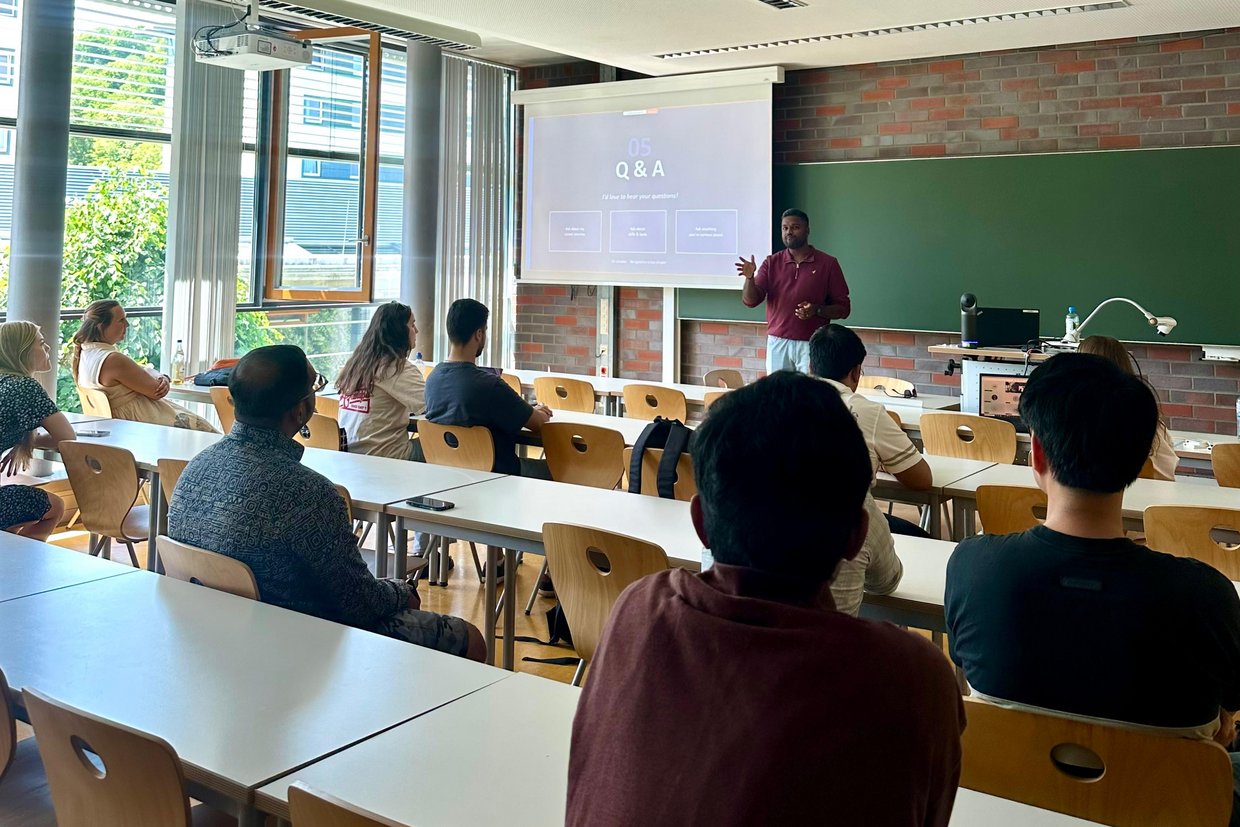
Anirudh Gowda, a graduate of the Master’s program in Mechatronics & Robotics, openly shared his journey from Schmalkalden University of Applied Sciences to a successful career in the German robotics industry. After beginning his studies in 2021, he secured an internship at a robotics company, where he first worked as an intern, then as a working student, and ultimately as a Robotics Automation Engineer.
One of the key messages of his presentation was: “Choosing the field is 80 percent of the work.” According to Gowda, selecting the right field of work is often more important than the application process itself. Students should therefore not simply follow current trends but instead analyze labor market demands and identify areas in which their skills will be needed in the long term.Gowda particularly emphasized the importance of internships. “Internships over part-time jobs” was his clear advice to participants. Internships, working student positions, and practice-oriented thesis projects are among the most important gateways to the German labor market. At the same time, he warned students against becoming overly focused on part-time jobs. Those who invest all their energy in short-term employment may lose valuable opportunities to build relevant professional experience and expand their professional networks.
As a key competitive advantage, the alumnus highlighted the importance of developing a strong personal profile. Students need to learn how to make their individual strengths visible. “Find your USP and learn to sell yourself” – employers are not only looking for academic qualifications but also for individuals who demonstrate practical experience, initiative, and clearly recognizable competencies. Gowda also referred to the unique opportunities offered by Schmalkalden University of Applied Sciences. Close interaction with professors, modern laboratory facilities, and numerous hands-on projects had already enabled him to gain valuable experience during his studies—experience that later attracted considerable interest during job interviews. In particular, his work with robotic systems and industrial automation opened important professional doors.
In conclusion, he identified three key factors for a successful career start: practical projects, a German driving licence, and solid German language skills. In his view, these three elements form the foundation of many successful career paths. He noted that international students often underestimate the value of a driving licence, although it can significantly expand employment opportunities, particularly in technical professions.The German language also plays a crucial role. While initial career opportunities may sometimes be available in English, long-term integration and professional development are generally much easier with strong German language skills. According to Gowda, the focus should not be on perfection but on the willingness to learn continuously and actively use the language in everyday life.
During the subsequent Q&A session, participants engaged in lively discussions about application strategies, dealing with rejection, and the specific characteristics of the German labor market. Gowda also addressed factors such as regional ties and family circumstances that may occasionally influence hiring decisions—factors he humorously described as a kind of “social score.”
The strong participation and numerous questions once again demonstrated the high demand for practical insights and authentic personal experiences. Through formats such as Alumni Stories, Schmalkalden University of Applied Sciences creates valuable opportunities for exchange between students and alumni, thereby strengthening career orientation and supporting the successful transition of international students into the German labor market.