Who actually influences whom? Is it our own decisions, or have algorithms, storytelling, and strategically deployed visual stimuli long since taken over? Where does persuasive communication end and manipulation begin?
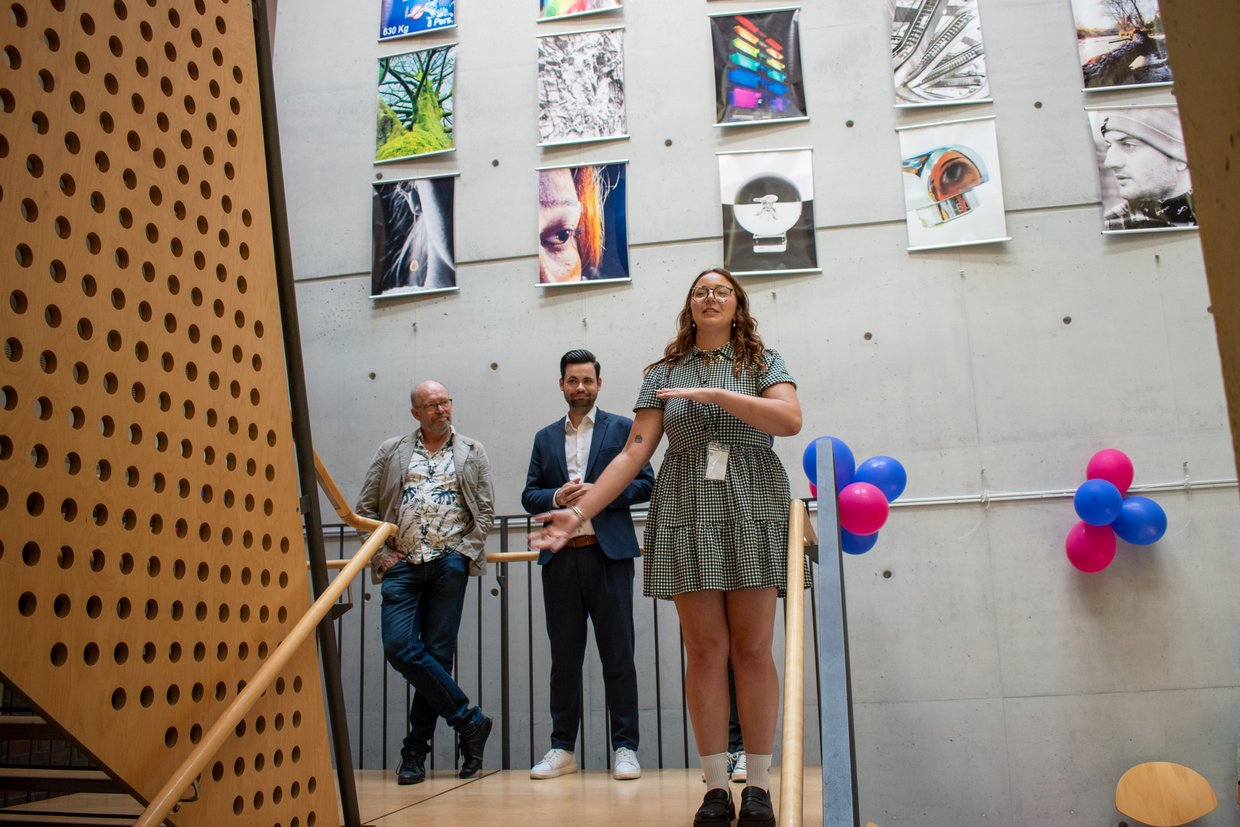
Under this theme—manipulation—creative projects, interactive media works, and artistic installations explored the mechanisms that shape the way we think, feel, and act. “Intermediale” at the School of Computer Science is the traditional annual highlight of the Multimedia Marketing program. For many years, the event has been organized, planned, and executed by students—from the initial idea to the final implementation.
Deputy Mayor Christoph Zimmermann also attended the opening. “With AI, we can no longer tell what has been manipulated,” Zimmermann said. This makes it all the more important to raise awareness about how to recognize manipulation.
In addition to the students’ creative projects, the event also featured a variety of presentations, thought-provoking ideas, and insights from academia and the professional world on topics related to psychology, media, and marketing. For example, Prof. Matthias Lippold from the School of Economics provided fascinating insights into the psychological mechanisms of manipulation and demonstrated how perception, decision-making, and behavior can be influenced. Prof. Elisabeth Scherr examined how visual design can be used in financial communication to influence our perceptions.
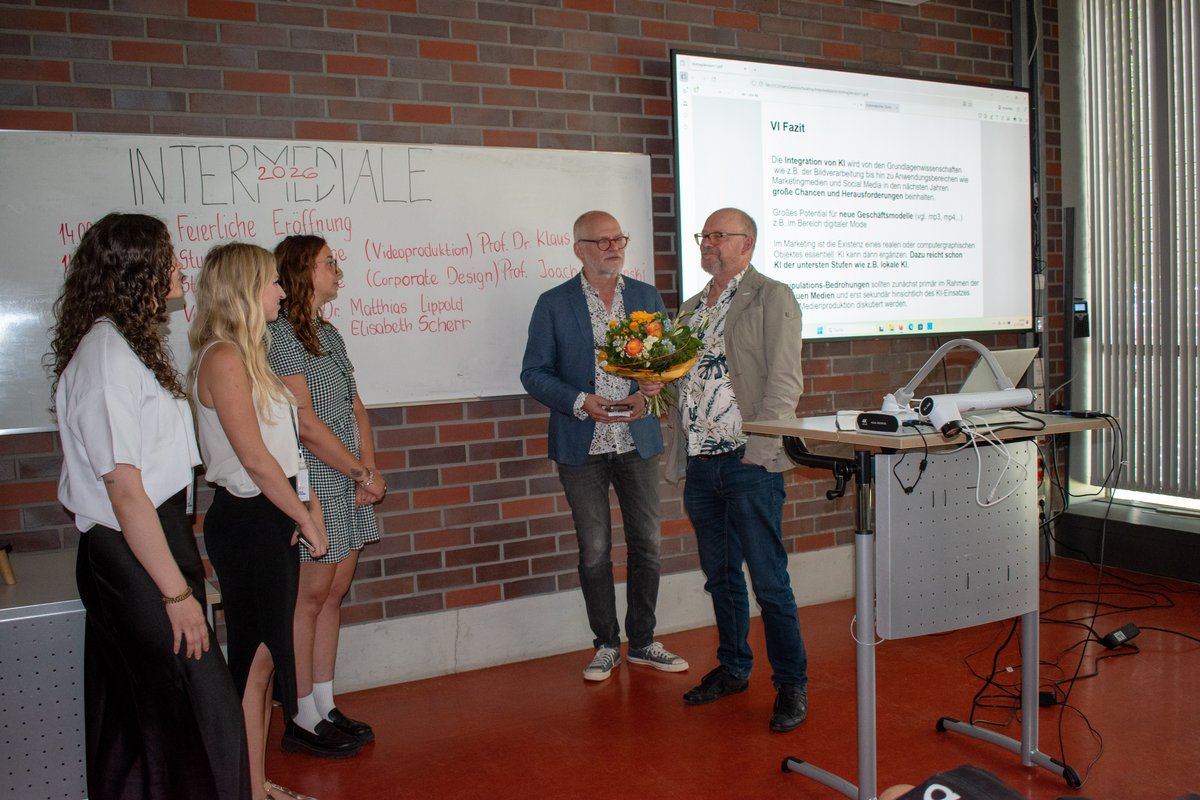
For Professor Klaus Chantelau, this was his last Intermediale before he retires. He founded the Intermediale thirteen years ago together with his colleague, Prof. Joachim Dimanski. The students gave him a warm send-off with a bouquet of flowers.